The Physics of a Properly Set Table, From Course to Course
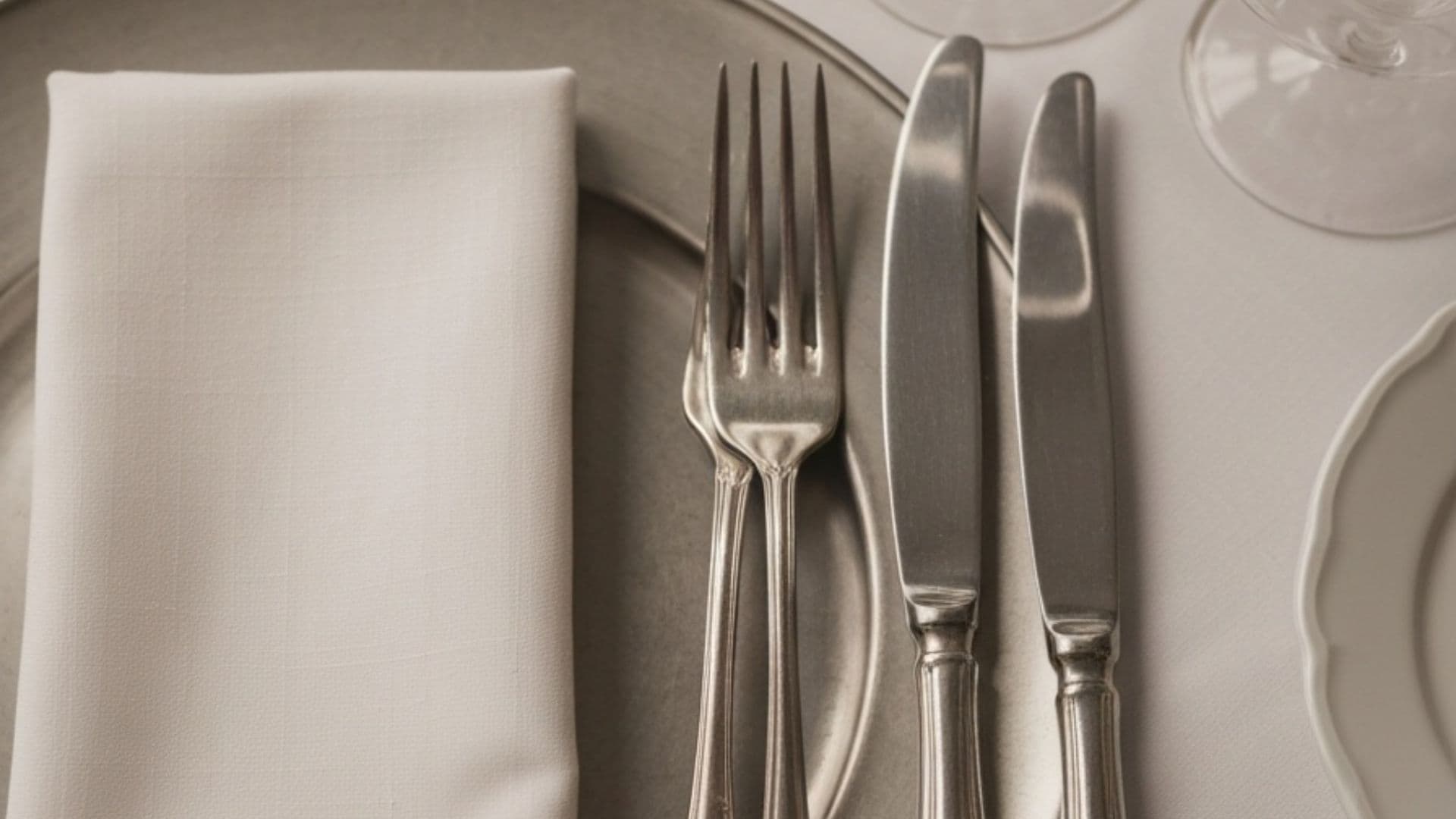
A properly set table looks like tradition for its own sake until you understand that nearly every element of it solves an actual, practical problem, most of them physics problems, not etiquette ones.
Start with cutlery placement: outside-in, meaning the utensils for the first course sit farthest from the plate, with each successive course's utensils closer in. This isn't arbitrary formality, it's a sequencing solution for service staff working a multi-course meal without needing to reset the table between courses. A diner instinctively works outside-in through the meal, picking up the correct utensil for each course without needing to be told, because the physical layout itself encodes the order. Remove a course and the system still works; nothing needs re-explaining mid-meal.
This traces to service à la russe, literally "in the Russian style", a format popularized in French dining in the mid-1800s that replaced the earlier standard, service à la française, where every dish for the entire meal was placed on the table simultaneously and diners served themselves from what was in reach. Service à la russe introduced the sequential, course-by-course format that's now simply assumed to be how formal dining works: each course plated individually in the kitchen and brought out in sequence. The outside-in cutlery layout is a direct structural consequence of that shift, it only makes sense once courses arrive one at a time rather than all at once.
Glassware placement follows a similar logic, arranged upper-right of the plate in the order they'll be used, water glass closest and wine glasses stepping outward for each course's pairing, again, a sequencing aid, not decoration. A server refilling glasses mid-service can identify which glass belongs to which course at a glance, and so can the diner.
Then there's mise en place, "everything in its place", the kitchen-side discipline of having every ingredient prepped, portioned, and positioned before service begins, rather than chopping and measuring mid-service under time pressure. This isn't table-setting exactly, but it's the upstream version of the same principle: physical organization that removes decision-making and error under time pressure, whether that's a server working a table or a line cook working a ticket rail during a dinner rush.
The napkin placement, the bread plate positioned upper-left, the charger plate as a placeholder beneath the first actual course, all of it reduces to the same function: a physical system that lets service run predictably and efficiently across many courses and many tables simultaneously, without verbal coordination for every step. What reads as ceremony is mostly logistics that calcified into etiquette once the practical need for it became invisible.
Where it came from
- Mid-1800s
Service a la russe changes everything
Course-by-course dining, plated in the kitchen and brought out in sequence, replaced the earlier format where every dish was set on the table at once. The outside-in cutlery layout is a direct consequence: it only makes sense once courses arrive one at a time.
Source: Service a la francaise et service a la russe dans les menus du XIXe siecle (2008), open archive
- Consequence
Layout as a sequencing system
Utensils sit outside-in so a diner instinctively reaches for the right one each course, and a server can read glassware by course at a glance. Remove a course and the system still works; nothing needs re-explaining mid-meal.
How it is made
Nearly every element of a set table solves a practical problem, most of them physics or logistics rather than etiquette. What reads as ceremony is mostly a system that lets service run predictably across many courses and tables without verbal coordination.
- Sources
- 2 consulted, 1 primary
- Fact-check
- Passed
- Standards
- Passed
- Edited & approved
- Josh Perry, June 30, 2026