Natural vs. Washed Process: What Actually Changes in the Cup
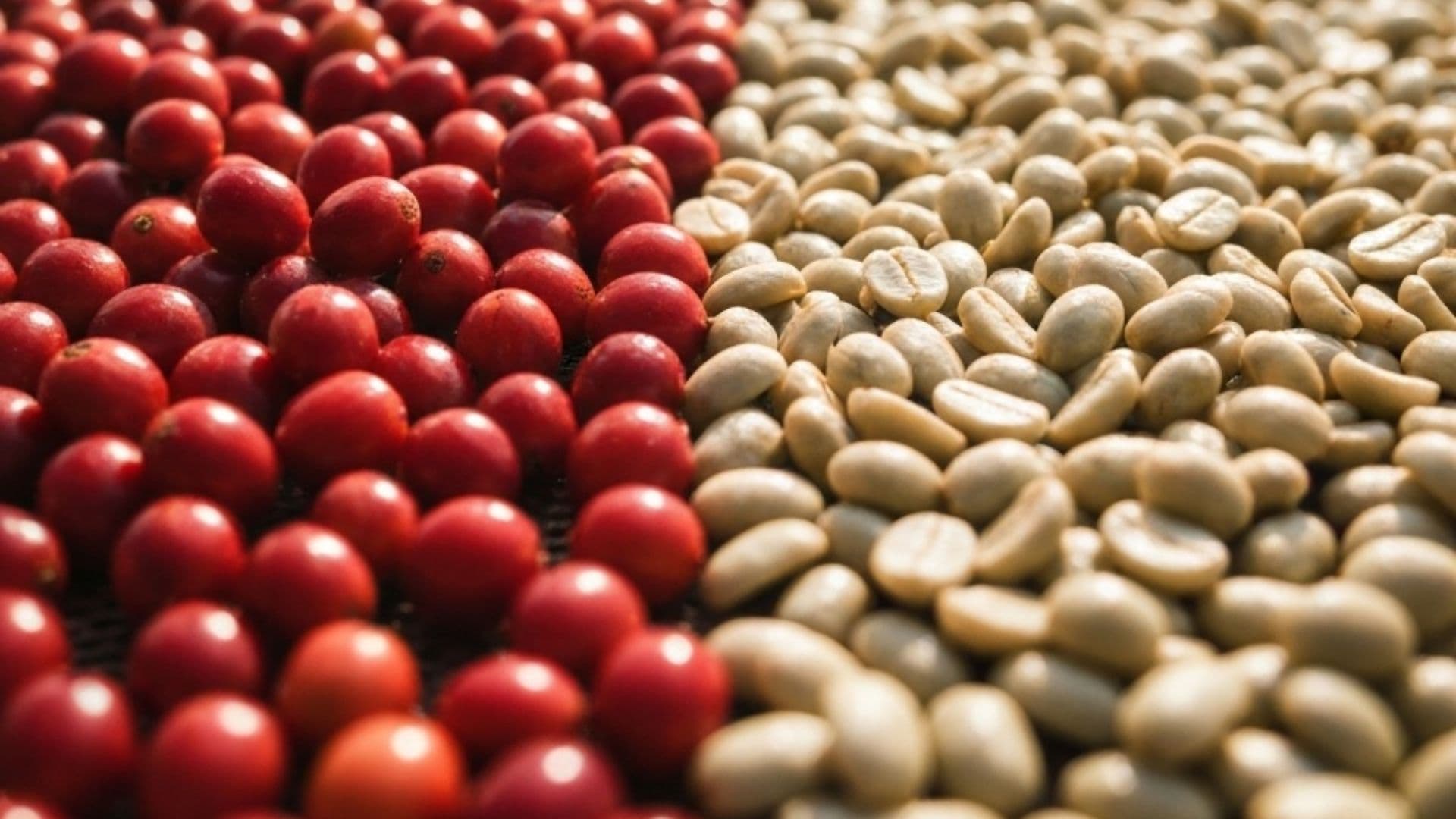
Coffee processing happens before a single bean is roasted, it's what happens to the fruit (the "cherry") that surrounds the seed you actually brew. Two methods dominate specialty coffee, and they produce genuinely different cups from the same beans grown on the same trees.
Washed process strips the fruit off the seed before drying, pulped, fermented briefly in tanks to loosen the remaining mucilage, then washed clean and dried as bare, pale-green seeds. Natural process skips nearly all of that: whole cherries dry in the sun, fruit and all, for two to four weeks, and the dried husk is only removed afterward, right before roasting.
The flavor difference comes down to contact time. In a washed coffee, the seed spends very little time touching the fruit's sugars (hours, not weeks) so what ends up in the cup is closer to the bean's own character: clean, often more acidic, with flavor notes that read as clear and specific (a washed Ethiopian might taste distinctly of bergamot or lemon verbena). In a natural, the seed sits inside slowly fermenting fruit for the entire drying period, and sugars and fruit compounds migrate into it. Naturals tend to taste rounder, heavier in body, and more like blended fruit, sometimes strawberry or red wine, sometimes overripe and funky if the drying wasn't controlled well.
Neither method is "better" in the abstract, they're different tools for different beans and different intended flavor profiles, the same way a winemaker chooses between stainless steel and oak. A naturally-dry-processed low-grown bean can taste extraordinary; a poorly executed natural on the wrong bean tastes like fermented garbage, which is the actual risk of the method. Natural process is less forgiving, get the drying wrong (uneven cherry moisture, mold from humidity, too much time) and it shows up unmistakably as an off, boozy funk. Washed process is more consistent because there's less opportunity for the process itself to go wrong; a competent washing station produces a clean cup reliably.
For a home buyer, the useful signal isn't "washed is better" or "natural is better", it's what the roaster's tasting notes tell you to expect, and whether that matches what you actually like drinking. If you gravitate toward bright, tea-like coffee, buy washed. If you like heavier body and fruit-forward sweetness, buy natural. The quality cliff here isn't about spending more, a $16 bag of well-executed natural process beats an $28 bag of poorly executed natural every time, and the price tag alone won't tell you which you're getting. Roast date and the roaster's own transparency about processing and drying conditions are better signals than price.
Where it came from
- Pre-harvest
The split happens before roasting
Processing is what happens to the fruit around the seed, long before a roaster ever sees it. Washed process strips the fruit within hours; natural process dries the whole cherry, fruit and all, for weeks. The bean is the same; the contact time is not.
- Drying
Weeks of contact, or hours
In a natural, the seed sits inside slowly fermenting fruit for the entire drying period, and sugars migrate into it. In a washed coffee that window is hours, so what reaches the cup is closer to the bean's own character.
How it is made
Neither method is better in the abstract; they are different tools for different beans and intended flavors. What separates a good example from a bad one is control during drying, not the method itself.
Specialty coffee beans
What to buy
Recommendations rest on verifiable specifications: documented processing methods, fermentation and drying protocols, and roast-date labelling. We have not tasted these coffees — NLNT operates no cupping panel. Roast date is treated as a gate because it is a printed fact, not a flavour judgement.
Washed process
Cleaner, more acidic, with flavor notes that read as specific and clear. The more forgiving method, so a modest bag is a safer buy.
Natural process
Rounder, fruit-forward, bigger in body when done well. Less forgiving: a poorly dried natural tastes fermented, so buy from a roaster who is transparent about drying.
- How this was made
- Recommendations rest on verifiable specifications: documented processing methods, fermentation and drying protocols, and roast-date labelling. We have not tasted these coffees — NLNT operates no cupping panel. Roast date is treated as a gate because it is a printed fact, not a flavour judgement.
- Sources
- 2 consulted
- Price bands
- Editorial judgement, not a formal price survey.
- Fact-check
- Passed
- Standards
- Passed
- Edited & approved
- Josh Perry, July 11, 2026