Automatic Movements, Explained From the 1755 Lever Escapement Forward
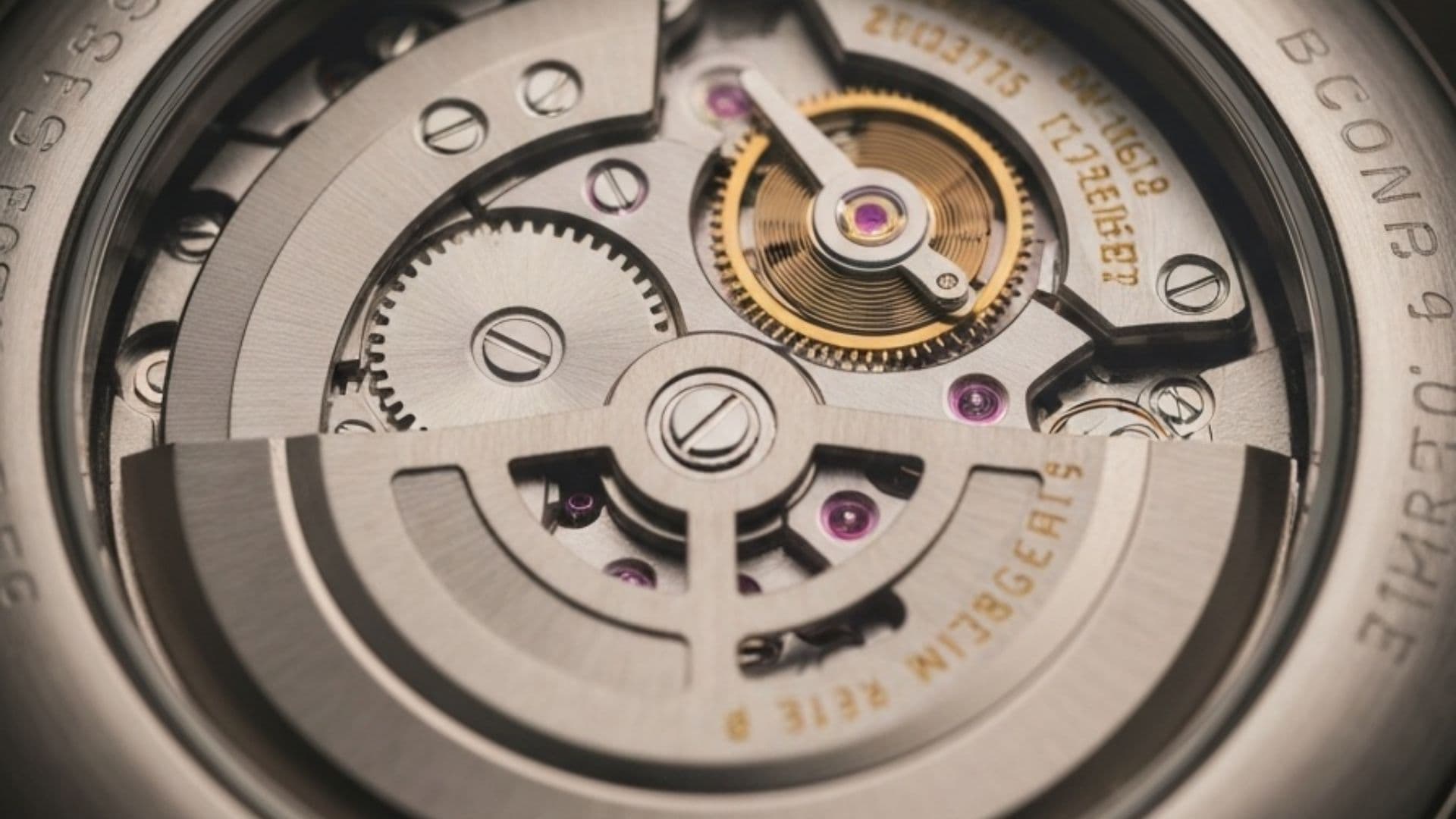
Every automatic watch sold today relies on a mechanism that reached its modern form in 1931, when Rolex mounted the winding weight on a central axis so it could turn a full circle: a rotor that swings with the wearer's arm and winds the mainspring through a set of reduction gears. The idea is older than that. Abraham-Louis Perrelet is credited with the first self-winding mechanism around 1777, in a pocket watch driven by the motion of walking rather than the wrist, and John Harwood patented the first self-winding wristwatch in 1923. Before any of them, watches were wound by hand, and the entire selling point of "automatic" was solving one specific, mundane problem: owners forgetting to wind their watch and having it stop.
That's worth sitting with, because a lot of marketing language around automatic movements implies the self-winding rotor is a mark of horological sophistication in itself. It isn't. It is a convenience feature, elegantly solved a long time ago, that happens to require genuine mechanical engineering to execute well. The actual sophistication in a modern automatic movement lives elsewhere. It lives in the escapement, the mechanism that releases the mainspring's stored energy in tiny, regular increments, which is what makes a watch tick at a steady rate instead of unwinding all at once. That is the part with the 1755 pedigree: Thomas Mudge's detached lever escapement, still the basis of the escapement in most mechanical watches made since. It lives in the balance wheel's regulation, and in finishing quality that affects longevity and serviceability more than day-to-day accuracy.
Here's where the honest accuracy conversation happens. A well-regulated mechanical watch, at any price point above roughly $500, typically runs within -5 to +15 seconds a day, a spec that hasn't meaningfully changed in decades regardless of how much more the watch above that price costs. A $50,000 watch is not going to keep dramatically better time than a $2,000 one; both are mechanical devices subject to the same physical constraints of gravity, temperature, and the balance wheel's oscillation rate. If pure timekeeping accuracy is the actual goal, a $30 quartz watch beats every mechanical watch ever made, automatic or not, because a quartz crystal's oscillation is orders of magnitude more stable than any spring-and-gear system.
So what does the money above $2,000 actually buy? Mostly three things: finishing (hand-beveled bridges, polished screw heads, decorative engraving visible through a display caseback, none of which affects function and all of which affects how the movement looks and how much skilled labor went into it), complexity (additional functions like a chronograph, moonphase, or perpetual calendar, each of which is genuinely harder to engineer and assemble), and brand heritage, which is a real cost but not a mechanical one.
Where spending more stops buying more accuracy: almost immediately, once you're past a competently regulated movement. Where it keeps buying something real: finishing, complication count, and the accumulated expertise of houses that have been solving these specific mechanical problems for over a century. Buy for those reasons, honestly stated, rather than for a timekeeping improvement the mechanism was never going to deliver.
Where it came from
- 1755
Mudge builds the lever escapement
Thomas Mudge makes the first detached lever escapement, the part that releases the mainspring's stored energy in regular increments. This is the 1755 in the headline, and it is the mechanism that decides whether a watch keeps time. It has nothing to do with self-winding, and it is still the basis of the escapement in most mechanical watches made since.
Source: Britannica, Thomas Mudge
- c. 1777
Perrelet winds a watch by walking
Abraham-Louis Perrelet is credited with the first self-winding mechanism, in a pocket watch wound by the motion of walking rather than by the wrist. Dates in the record run between 1770 and 1777 and the attribution is traditional rather than settled by a surviving patent, which is worth stating plainly rather than rounding off.
Source: Monochrome, a comprehensive history of the automatic watch
- 1923
Harwood puts it on the wrist
John Harwood patents the first self-winding wristwatch, using a weight that pivots between two bumpers instead of turning a full circle. Serial production was shown at the Basel fair in 1926. This is the first time the mechanism is driven by an arm rather than a walk.
Source: Harwood's Swiss patent No. 106583, granted 1924 (summary)
- 1931
Rolex mounts the rotor centrally
Rolex's Perpetual puts the weight on a central axis so it can rotate a full 360 degrees, which is the arrangement in essentially every automatic sold since. The convenience problem was solved here, and it has not needed solving again.
Source: Monochrome, a comprehensive history of the automatic watch
How it is made
Above a competently regulated movement, spending more stops buying accuracy almost immediately. What it keeps buying is finishing, complication count, and the accumulated expertise of houses that have solved these problems for a century.
Mechanical watch
What to buy
Recommendations rest on verifiable specifications: published rate tolerances, escapement geometry, chronometry standards such as COSC, and documented service intervals. We have not worn or timed these watches. Timekeeping is held to the physical ceiling of a balance-and-spring system: past competent regulation, accuracy does not scale with price.
Any quartz watch
A crystal's oscillation is orders of magnitude more stable than any mechanical movement. If pure timekeeping is what you want, mechanical is the wrong tool.
A well-finished automatic around $2,000
Lands at the same daily-rate range as watches many times its price, with finishing and serviceability you will actually live with.
- How this was made
- Recommendations rest on verifiable specifications: published rate tolerances, escapement geometry, chronometry standards such as COSC, and documented service intervals. We have not worn or timed these watches. Timekeeping is held to the physical ceiling of a balance-and-spring system: past competent regulation, accuracy does not scale with price.
- Sources
- 4 consulted, 4 primary
- Price bands
- Editorial judgement, not a formal price survey.
- Fact-check
- Passed
- Standards
- Passed
- Edited & approved
- Josh Perry, July 21, 2026
- Corrections
- 1 issued