In-House Movements vs. ETA: Does It Matter at $2,000?
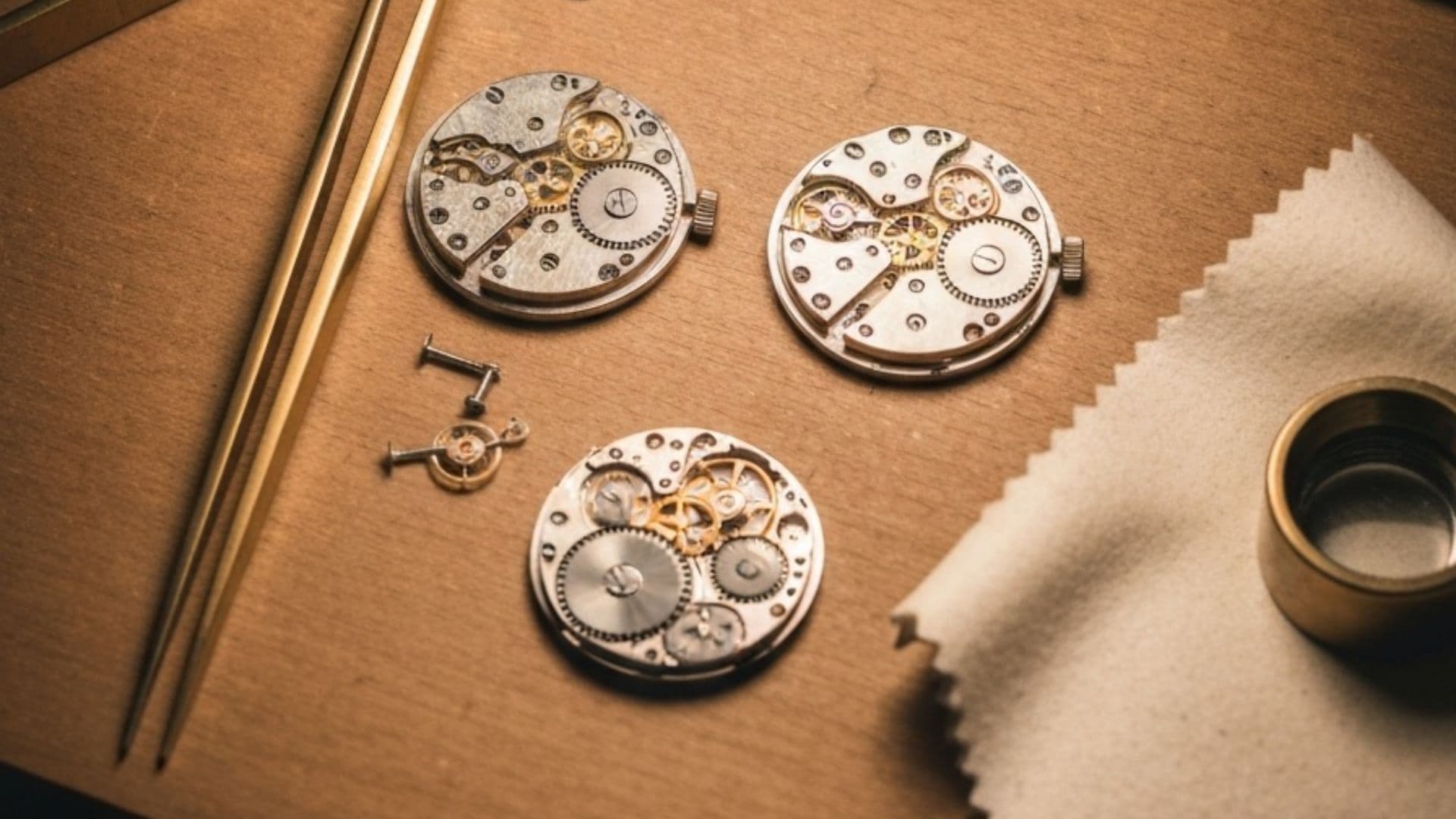
"In-house movement" is one of the most consistently used selling points in modern watchmaking, and one of the least consistently defined. At its strictest, it means a brand designs, engineers, machines, assembles, and regulates its own movement entirely within its own facilities. In practice, the term gets stretched to cover movements that are heavily modified versions of a third-party base, or built by a subsidiary company under the same parent group, which is a meaningfully different claim than building from a blank sheet.
ETA, a movement manufacturer owned by the Swatch Group, has supplied base movements to a huge share of the Swiss watch industry for decades. Brands from mid-range to genuinely high-end have built watches around ETA calibers, sometimes with modifications, sometimes essentially stock. This isn't a mark of cutting corners. ETA movements, particularly the well-regarded ones like the 2824-2 or the 7750 chronograph base, have a multi-decade track record of reliability, wide parts availability, and straightforward serviceability at almost any watchmaker, because so many technicians have worked on them.
The genuine case for in-house movements isn't accuracy. An in-house automatic and a well-regulated ETA-based automatic will both land in roughly the same -5 to +15 seconds a day range, because they're both governed by the same escapement physics. The case is threefold: design flexibility (an in-house team can build a movement to a specific case shape or complication set an off-the-shelf base can't accommodate), brand narrative and resale value (particularly in the secondary market, "manufacture" status genuinely affects what collectors will pay), and, less discussed, long-term parts control. A brand building its own movement isn't dependent on a supplier's continued willingness to sell to it. That stopped being hypothetical in 2002, when Swatch Group announced ETA would stop delivering movement blanks to third parties, and it stayed unresolved for most of two decades while the Swiss competition authority required ETA to keep supplying.
The case against, cost-wise: developing a movement from scratch is enormously expensive, and that R&D cost gets passed to buyers regardless of whether the resulting movement performs better than a proven ETA base for daily wear. At the $2,000 price point specifically, the honest answer is that it rarely matters for anything you'd notice wearing the watch. A well-executed ETA-based watch at that price will very likely out-perform a rushed or under-refined in-house attempt at the same budget, because building a good movement from scratch at low cost is genuinely hard, and corners get cut somewhere.
Where it does matter: serviceability decades from now (in-house movements from smaller brands can become harder to service if the brand struggles or discontinues the caliber, whereas ETA-based movements remain serviceable almost anywhere), and collectibility, which is a real financial consideration but not a mechanical one. Below roughly $5,000 to $8,000, "in-house" is more often a marketing premium than a functional upgrade. Spend there for the story, not for the timekeeping.
Where it came from
- Decades of supply
ETA quietly ran the industry
ETA, owned by the Swatch Group, supplied base movements across the Swiss industry for decades, from mid-range to genuinely high-end. Building a watch around a well-regarded ETA caliber was never a mark of cutting corners, and for most of that period there was no strategic reason to do anything else.
Source: Grail Watch Wiki, ETA
- 2002
Swatch announces the exit
Nicolas G. Hayek announces ETA will stop delivering ebauches, the unassembled movement blanks, to third parties from 2006, and ETA raises ebauche prices by 25 percent the same year. This is the moment owning a movement stopped being a preference and became a supply question. Note the direction: the supplier chose to withdraw, and its customers had to react.
Source: Grail Watch Wiki, ETA
- 2004 to 2020
The regulator slows the exit down
COMCO, the Swiss competition authority, required ETA to keep supplying under volume caps rather than let the withdrawal run on Swatch's timetable. The deadline moved repeatedly, a 2011 ruling set phased reductions with a full stop targeted for the end of 2019, and Swatch took legal action against COMCO in 2020. The exit took most of two decades, which is why the in-house wave arrived in stages rather than all at once.
How it is made
In-house does not mean more accurate: an in-house automatic and a well-regulated ETA-based one land in the same daily-rate range, governed by the same escapement physics. The real case is design flexibility, resale narrative, and long-term parts control.
Movement provenance premium
What to buy
Recommendations rest on verifiable specifications: calibre documentation, published rate tolerances, parts availability and service pricing. We have not worn or timed these watches. "In-house" is treated as a functional claim to test against the documentation, not a virtue to assume.
A well-executed ETA-based watch
Very likely out-performs a rushed in-house attempt at the same budget, and stays serviceable almost anywhere for decades.
A genuine manufacture movement above ~$8,000
At this tier the R&D buys real design freedom and collectibility. Below it, you are usually paying for the story.
- How this was made
- Recommendations rest on verifiable specifications: calibre documentation, published rate tolerances, parts availability and service pricing. We have not worn or timed these watches. "In-house" is treated as a functional claim to test against the documentation, not a virtue to assume.
- Sources
- 3 consulted, 3 primary
- Price bands
- Editorial judgement, not a formal price survey.
- Fact-check
- Passed
- Standards
- Passed
- Edited & approved
- Josh Perry, July 6, 2026
- Corrections
- 1 issued